
Workshop plans
| Part of a toolkit for the ethical and effective use of children's information - practical tools.
The information culture iceberg
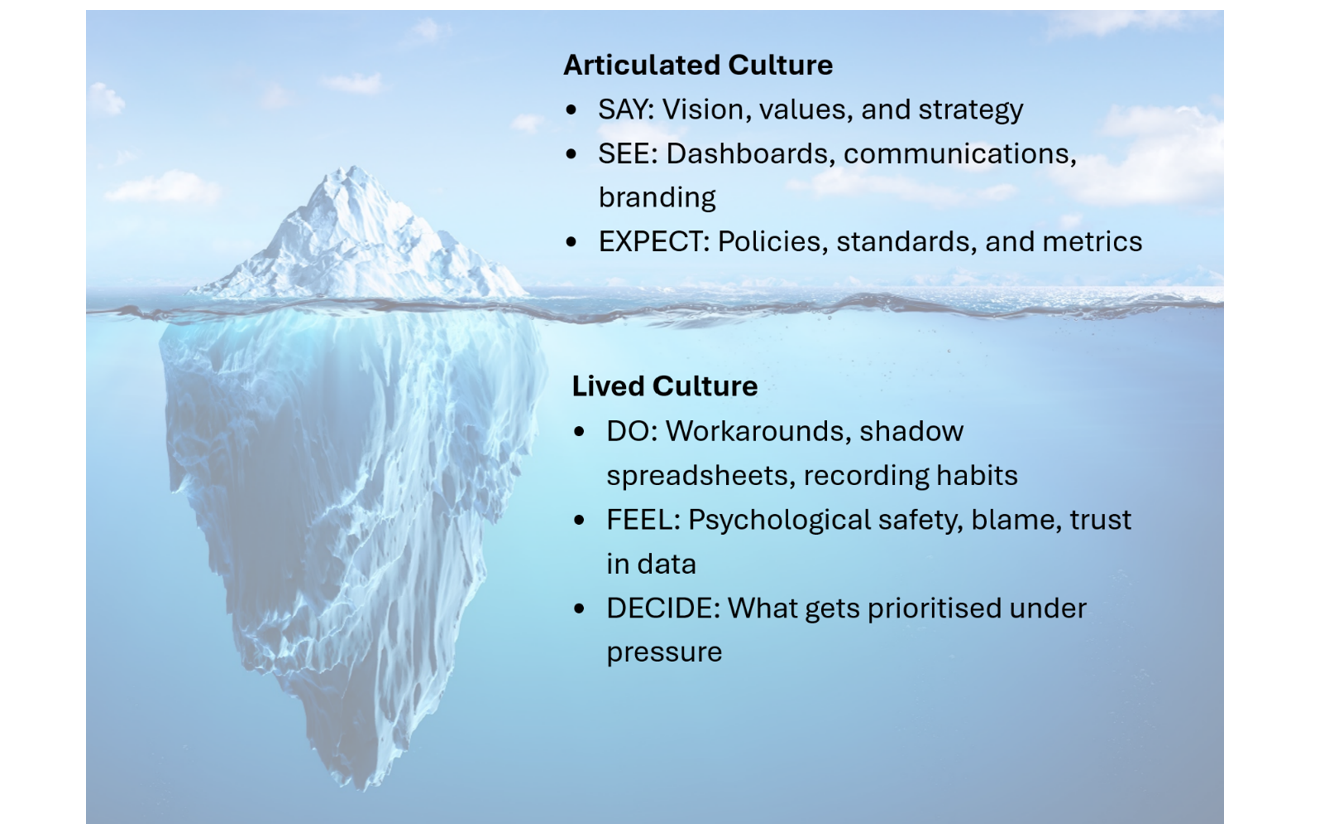
Purpose: To help multi-agency teams, practice leads, and data leads identify gaps between official organisational messaging (Articulated Culture) and actual daily workplace realities (Lived Culture). The exercise helps evaluate information culture and cultural readiness to change.
Time Required: Rapid culture check 60 minutes. In-depth culture check 0.5-1 day.
Materials: Flip chart or digital whiteboard, sticky notes, and a drawing of an iceberg with a clear waterline.
Steps
Step one: Map above the waterline
Ask participants to write on blue sticky notes what the organisation officially claims about its information culture and place them above the waterline:
- Say: What do strategic documents, visions, and values say about how children's information and voice should be used?
- See: What is visibly presented on website dashboards, intranet pages, or staff communications?
- Expect: What explicit standards, policies, or statutory requirements are staff expected to follow?
Step two: Map below the waterline
Ask participants to write anonymously on yellow sticky notes what happens in daily practice and place them below the waterline:
- Do: How do staff record information when under pressure? What shadow systems or offline spreadsheets are routinely used?
- Feel: How do practitioners feel about data collection? Is there fear of blame if data errors occur, or is there psychological safety to discuss issues?
- Decide: When time or resources are scarce, what gets prioritised (e.g., ticking compliance boxes vs. capturing the qualitative story of the child)?
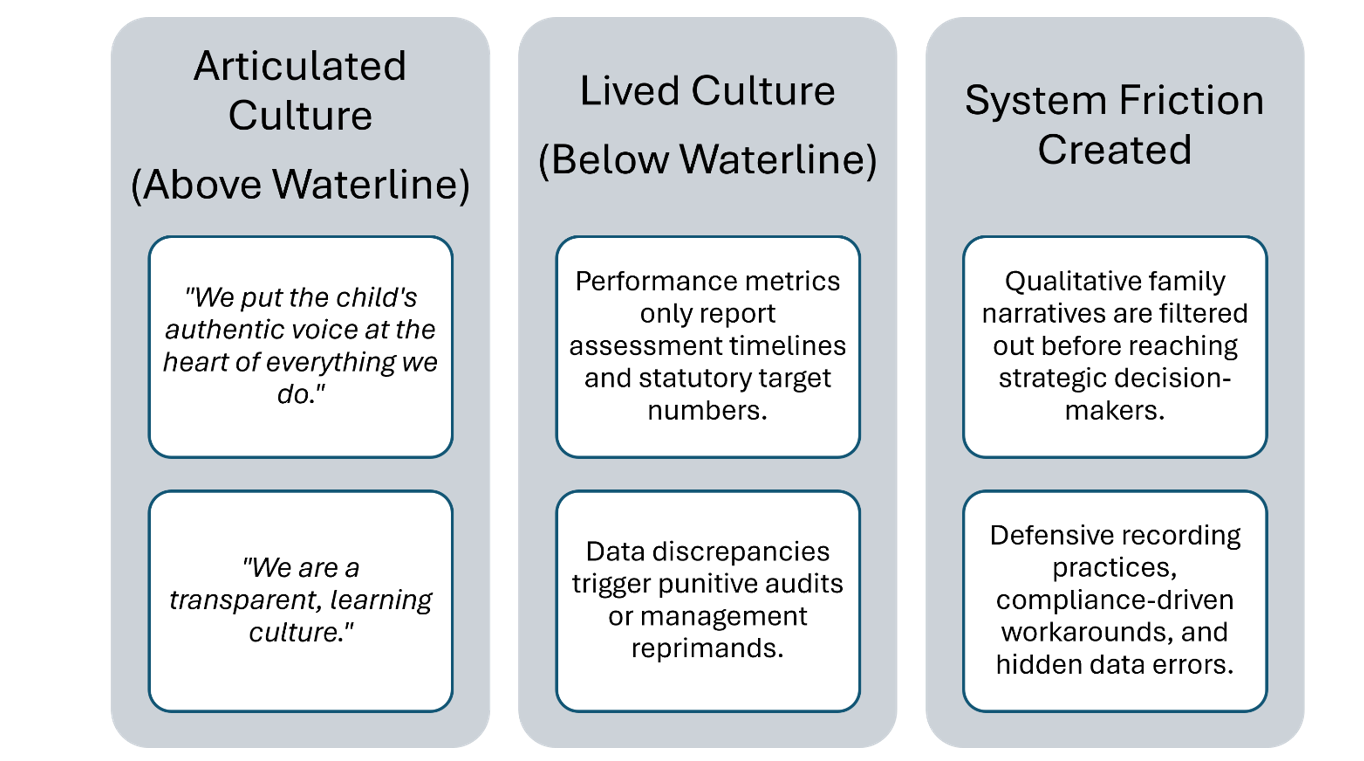
Step three: Identify misalignment and friction points
Review the iceberg as a group.
- How do things match up? Identify where the top and bottom sections conflict.
- Consider how the vision for culture misaligns with the reality of how things are.
- Where there is misalignment, consider what friction is created in the system.
Step four: Aligning articulated culture with lived culture
Select the single biggest misalignment and agree on an immediate action to move things forward:
- Which specific behaviour below the waterline needs to change? (e.g., Phasing out an unmonitored offline spreadsheet)
- What leadership support or system change is required to enable it? (e.g., Modifying case software screens so they match actual frontline workflow)
- Who will lead the action and when will progress be reviewed? (Set a 30-day check-in date)
A toolkit for the ethical and effective use of children's information
Digital resources explore definitions, tools and examples for practitioners and data leads to strengthen children's information use.