
Understanding the exploitation of adults
Part of Adult exploitation suite of linked resources.
An introduction to the exploitation of adults, particularly those who experience multiple needs and exclusions, and some of the ways in which adult exploitation manifests.
How exploitation can manifest
Exploitation can manifest in numerous ways, which may co-exist and overlap. It is important to remember that individual experiences differ. People may not experience or describe exploitation in the same way as others, particularly if they do not recognise their situation as abusive.
Analysis of Safeguarding Adults Reviews highlights the importance of professional curiosity in understanding an individuals’ circumstances. Assumptions about 'lifestyle choice' and inattention to the realities of people’s daily lives can adversely affect people’s safety. It is therefore essential to apply professionally curious practice to potential exploitation.
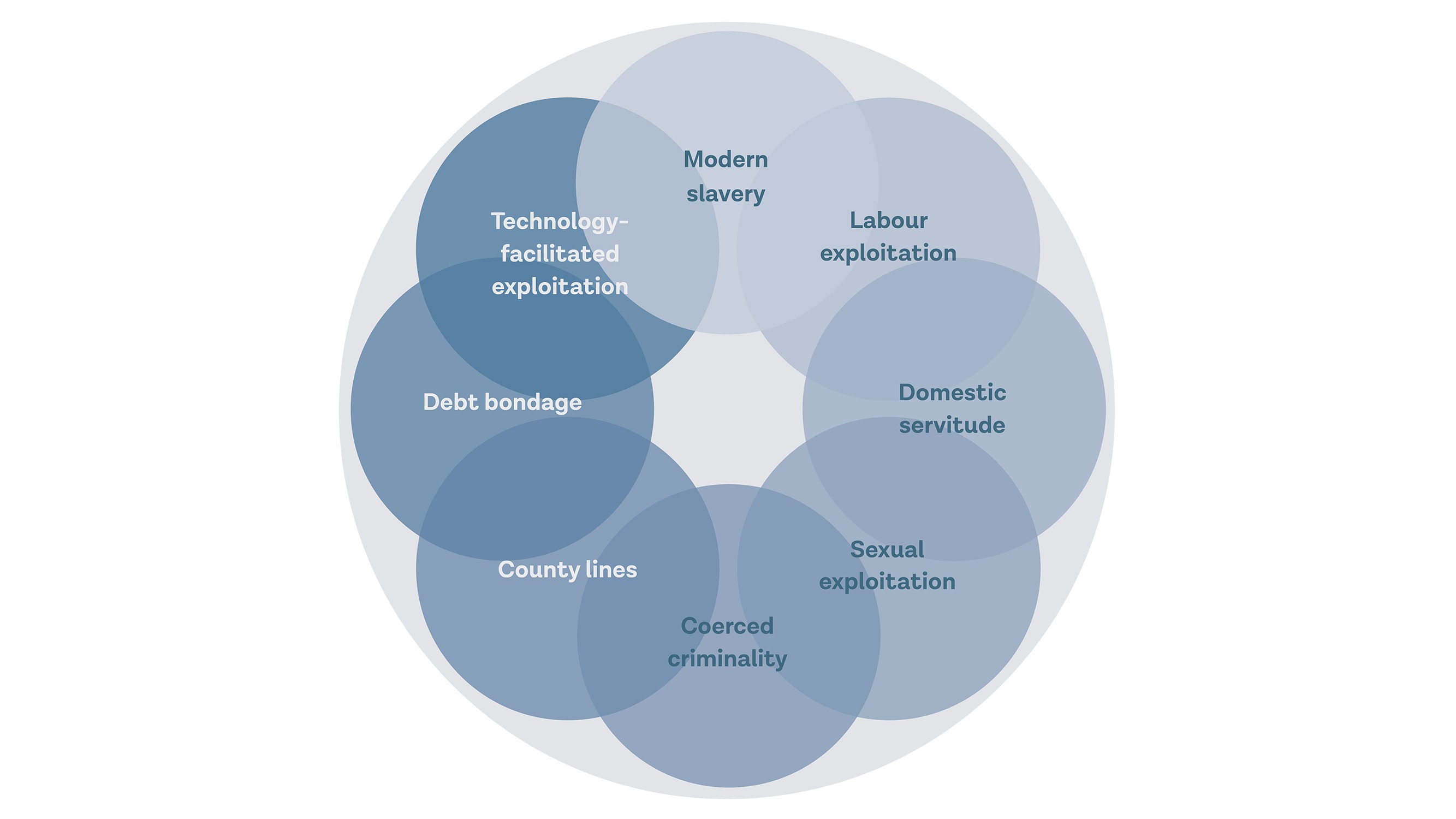
Forms of exploitation
Modern slavery is an umbrella term which includes but not limited to: slavery, servitude, forced or compulsory labour and human trafficking. Individuals are often controlled by threats, punishment, violence, coercion, grooming and deception. Modern slavery mechanisms can evolve, as perpetrators find new means of exploiting individuals and evading the attention of law enforcement authorities.
It is estimated that globally approximately 50 million people live in slavery across the world. 19,125 potential victims of modern slavery were referred to the UK Home Office in 2024.
Forced or compulsory labour is one form of modern slavery. This often involves a person being coerced, deceived or threatened into working for little or no pay; being forced to work to pay off excessive and illegitimate debts; or where someone else has control of their wages. Work may be physically demanding and unsafe. Labour exploitation was the most commonly reported form of adult exploitation in the UK’s National Referral Mechanism in 2024.
Labour exploitation is often identified in agriculture, construction, hospitality and services like car washing and nail bars. At surface level, the labour may appear consensual. Labour exploitation can also permeate the health and social care sectors. Increased risks of mistreatment and modern slavery in the workforce are highlighted by the CQC.
Further reading:
- Research in Practice - Forced labour and adult social care: Leader’s Briefing (2021)
Another type of modern slavery is domestic servitude, in which individuals are forced to work long hours in private households, undertaking tasks such as childcare and housekeeping for little, if any, pay. Domestic servitude may be more easily concealed than other forms of exploitation, as private homes are much less regulated than official places of work.
Sexual exploitation is characterised by an imbalance of power which is used to coerce, manipulate or deceive a person into sexual activity. This may be perpetrated physically, online or both. Sexual exploitation affects individuals born in the UK and those who have travelled here. Survivors report experiences of violence, pregnancy and forced abortion as a result of sexual exploitation.
Perpetrators often use grooming, coercion, threats and violence in sexual exploitation. It is therefore essential to explore the power dynamics at play in an individual’s situation. A person may appear - or even state - that they are choosing to provide sexual services consensually. However, they may be being exploited, whether through an overall lack of choice in their situation, through coercive control, or to pay for basic provisions such accommodation and food.
Coerced criminality occurs where individuals are forced to commit criminal offences for the benefit of the person exploiting them. This can involve a range of activities, including forced fraud, drug cultivation / dealing / storage, pickpocketing and theft. Victims may be prosecuted, convicted and even imprisoned for actions they take whilst under the control of the perpetrator. People exploited in criminal activity face risks of violence from both their exploiters and rival criminal groups and gangs.
‘County lines’ is a form of coerced criminality. It involves the exploitation of children, young people and adults to ‘deliver and / or store drugs, and associated money or weapons, to dealers or drug users, locally or in other counties’. County lines are controlled by organised crime networks, often using coercion, intimidation, violence (including sexual violence) and weapons to achieve their ends.
Debt bondage is frequently used to entrap people in exploitative conditions. People who travel to the UK from other countries may find themselves held in debt to the people who transported them. This debt is often only ‘repaid’ through forced labour and stolen wages.
People exploited within the UK may also find themselves in debt bondage. For example, victims of county lines are often manipulated into ‘repaying’ funds for ‘lost’ drugs or money which was intentionally taken by perpetrators to engineer a debt. Debt bondage can make it harder for people to either escape their situation or refuse to engage in criminal activities.
Technology provides continually evolving opportunities for exploitation, extending the power and influence of perpetrators. Technology can feature across different types of abuse and exploitation, often connecting with harms in the physical world.
It is essential to consider how technology-related exploitation might also restrict people’s ability to access support. If someone is being blackmailed over explicit images, they may feel shame or fear consequences around disclosing this. If they are experiencing surveillance or monitoring, it may be very risky to try to escape or seek help. Such challenges require careful consideration of how services can safely provide support.
Reflective questions
-
How well are these different forms of exploitation recognised in your context? What could be done to increase awareness?
-
How do you promote professional curiosity around exploitation? How well do your service’s current assessment processes explore the possibility of exploitation?
-
How can we expand our understanding and application of the Care Act 2014 to recognise and meet the needs of people experiencing exploitation today?
Professional Standards
PQS:KSS - Safeguarding | Assuring good social work practice and development | Promoting and supporting critical analysis and decision-making
CQC - Responsive | Safe
RCOT - Health and safety
Adult exploitation
Materials across three main sections, providing an introduction to the exploitation of adults, particularly those who experience multiple needs and exclusions.